

Stock that cannot be found, counted or trusted quietly costs money. Good inventory management for UAE businesses is less about expensive software and more about simple, consistent habits: clean product data, barcodes on everything, organised storage locations and regular counts.
Whether you sell on Amazon.ae and Noon, supply retailers or import goods for distribution, the tips below will help you keep accurate stock records — in your own storeroom or with a third-party logistics partner.
Why inventory management for UAE businesses deserves attention
Many UAE businesses sell through several channels at once: their own website, one or two marketplaces and wholesale customers. Each channel draws from the same physical stock, so a single counting mistake can lead to overselling online while a retailer order waits.
Imported stock adds another layer. When reordering depends on shipping and customs clearance, you cannot fix a shortage overnight. Accurate numbers let you reorder at the right time instead of reacting to empty shelves.
Finally, stock is cash. Products sitting unseen in a corner, or recorded in the wrong location, tie up money that could be spent on faster-moving lines or marketing.
Start with clean SKUs and product data
Effective inventory management for UAE businesses starts with a clear list of what you actually stock. If your product data is messy, every later step — receiving, picking, reporting — inherits the mess.
Create one SKU per sellable variant
Each size, colour, scent or bundle that a customer can order should have its own SKU. Avoid reusing old codes for new products, and keep the format consistent so your team can read a code and roughly understand what it is.
Record the basics for every SKU
- Product name and short description
- Barcode (manufacturer barcode or your own internal label)
- Units per carton and cartons per pallet, where relevant
- Dimensions and weight of the unit and the carton
- Any storage needs, such as keeping away from heat or stacking limits
- Batch or expiry information for products that need it
This information helps your warehouse team store goods correctly and helps you plan space, packaging and shipments.
Barcode everything and scan at every step
Manual entry and visual checks are where most stock errors begin. A barcode turns “I think this is the blue one” into a confirmed match. The key is to scan at each point where stock changes hands, not just at dispatch.
- Receiving: scan items as they arrive and compare against the supplier’s packing list, so differences are flagged before stock goes on the shelf.
- Put-away: scan the product and the location, so the system knows exactly where each item lives.
- Picking: scan each item as it is picked, so wrong variants are caught before packing.
At Enthusiasm 3PL, our inventory management service uses barcode scanning at receiving, put-away and picking for exactly this reason. If a product arrives without a usable barcode, labelling it at receiving is usually cheaper than fixing errors later.
Organise storage locations
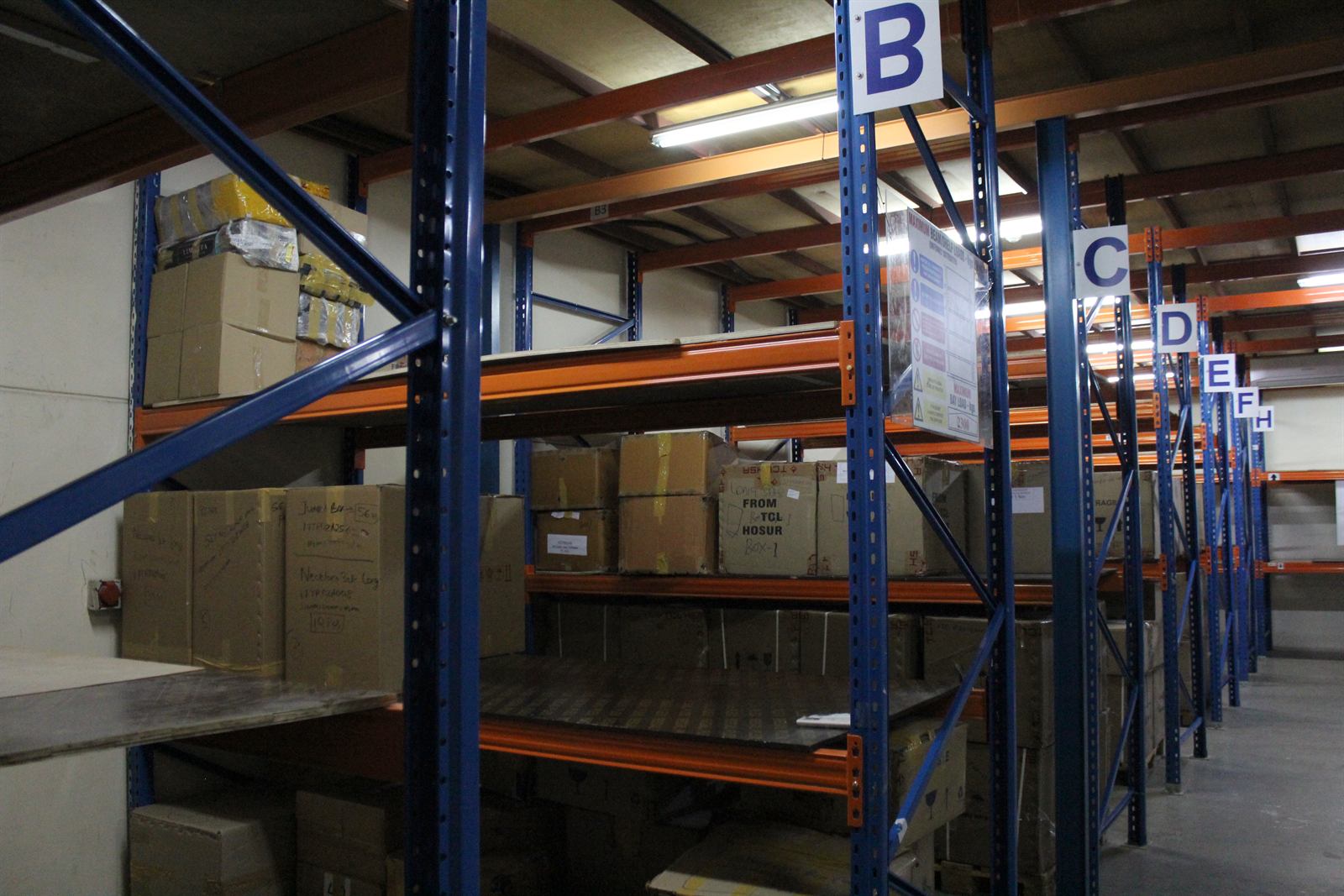
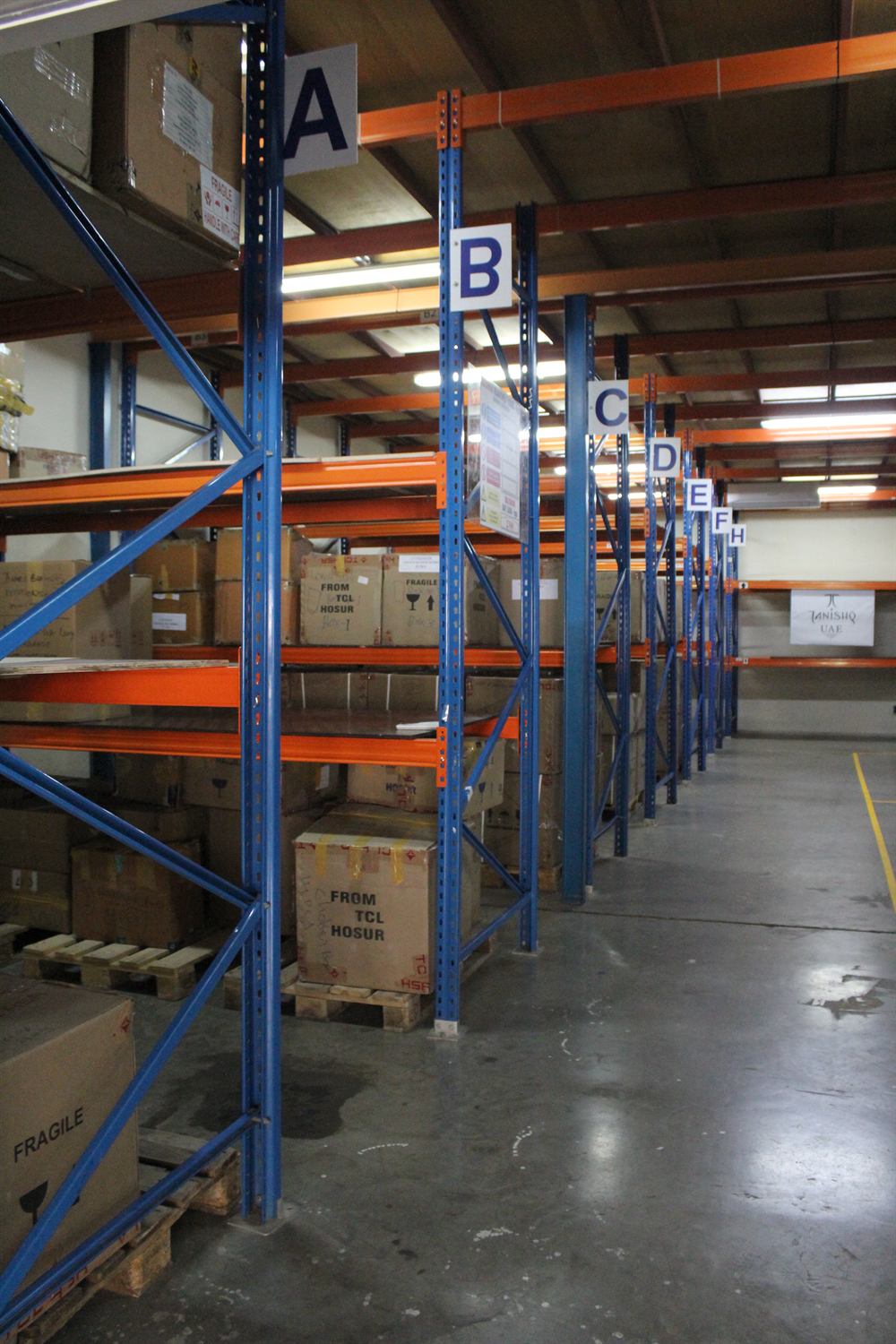
A product with no fixed location is a product that gets lost. Give every rack, shelf level and pallet position a simple location code, and record which SKUs are stored where.
Practical layout tips
- Keep fast-moving SKUs in easy-to-reach positions close to the packing area.
- Store bulk reserve stock on pallets and replenish pick faces from it.
- Separate similar-looking variants so pickers do not confuse them.
- Keep damaged, returned and quarantined stock in a clearly marked area, away from sellable goods.
Racked and palletised warehouse storage makes this structure much easier to maintain than loose stock in a storeroom. Products that are sensitive to heat, such as some cosmetics and perfumes, may need temperature-controlled storage — agree the product requirements with your provider before the stock arrives.
Count regularly with cycle counts
A once-a-year full stocktake can tell you that something went wrong, but not when or why. Cycle counting means counting a small group of locations or SKUs on a regular schedule, so the whole range is checked over time without stopping operations.
A common approach is to count your highest-value and fastest-moving SKUs more often, and slower lines less often. When a count does not match the system, investigate straight away: check recent receipts, picks and returns for that SKU while the trail is still fresh.
Over time, the pattern of discrepancies is just as useful as the corrections. If the same SKU keeps going wrong, the cause is often a look-alike variant, a missing barcode or an untidy location.
Use stock reports to make decisions
Reports are only useful if someone reads them and acts. Agree which reports you need, how often, and who is responsible for each decision. The table below shows a simple starting set.
| Report | What it shows | Decision it supports |
|---|---|---|
| Stock on hand | Current quantity per SKU and location | What can be sold or allocated today |
| Stock movement | Receipts, dispatches and adjustments over a period | Spotting unusual losses or errors |
| Slow-moving stock | SKUs with little or no recent movement | Promotions, bundles or stopping reorders |
| Low stock / reorder | SKUs approaching your reorder level | Placing purchase orders on time |
| Returns | Returned items and their condition | Restocking, repairing or writing off |
If you sell on marketplaces, keep a separate view of stock held at your warehouse versus stock already sent to marketplace fulfilment centres. Our Amazon.ae and Noon support helps sellers keep reserve stock in Dubai and prepare replenishment shipments when they are needed.
Before a busy period, review these reports early. Our peak season logistics checklist explains how to plan stock levels ahead of major sales events.
Frequently asked questions
Do small businesses really need barcodes?
Yes, if you have more than a handful of SKUs or similar-looking variants. Barcodes reduce picking mistakes and make counting faster. Labels can be printed and applied at receiving if your products do not already have them.
How often should we do cycle counts?
It depends on your SKU count and order volume. Many businesses count fast-moving and high-value items more frequently and slower lines less often. The important thing is a regular, documented schedule.
Can a 3PL manage inventory for several sales channels?
Yes. A 3PL can hold one inventory pool and fulfil website orders, marketplace replenishment and B2B orders from it. Agree reporting and stock allocation rules during onboarding.
What should we prepare before moving stock to a 3PL?
A clean SKU list with barcodes, carton details and any storage requirements, plus your current stock counts. This makes receiving and account setup much smoother.
Final thoughts
Effective inventory management for UAE businesses comes down to doing simple things consistently: clear SKUs, scanning at every handover, organised locations, regular counts and reports that lead to action. If you would rather focus on sales, a 3PL partner in Dubai can run these processes for you — our guide on choosing the right warehouse and fulfilment partner explains what to look for.
Want stock records you can trust? Share your SKU count, storage needs and order channels, and we’ll suggest an inventory setup that fits. Request a quote.