

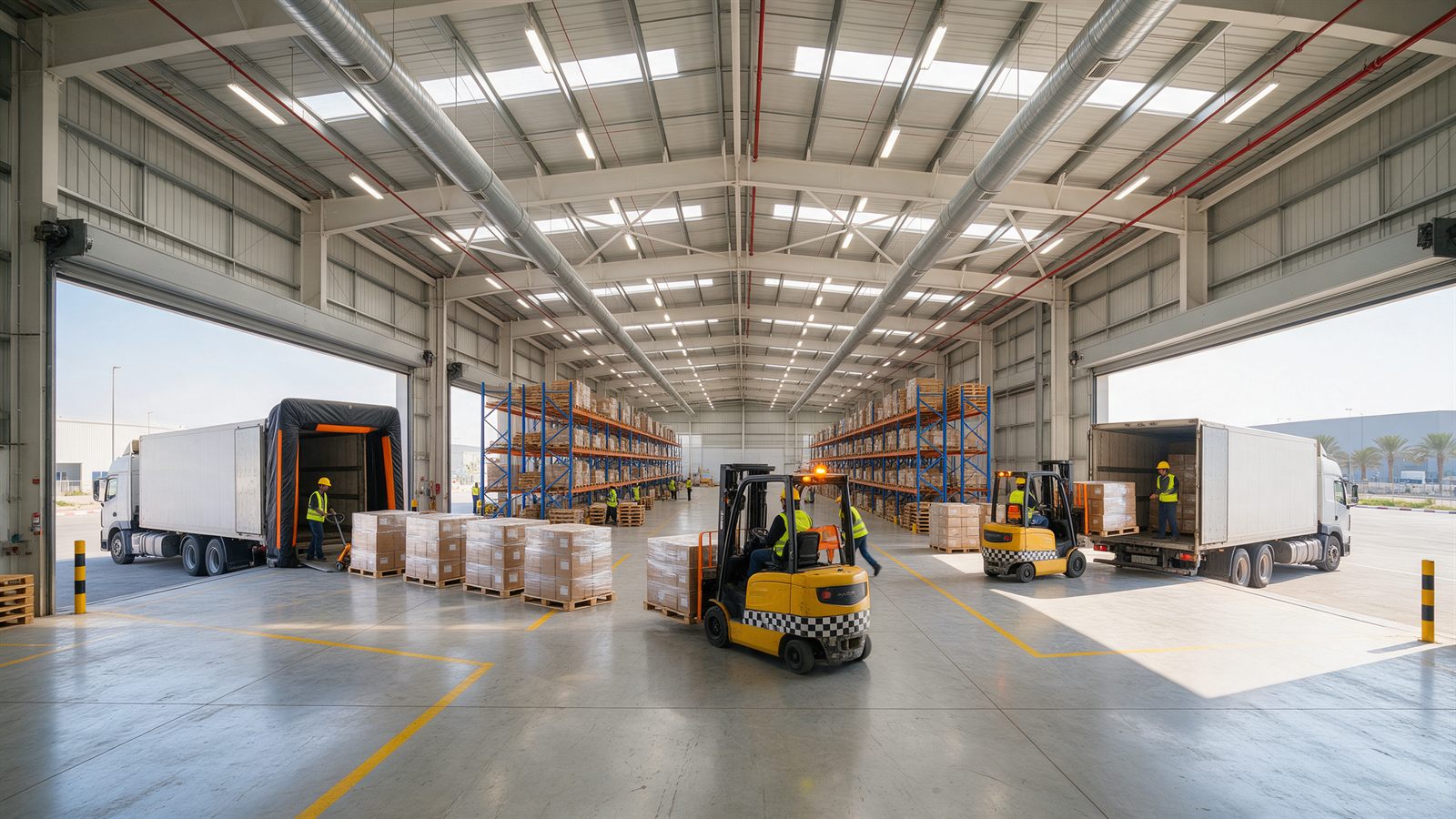
Not every shipment needs to sit on a shelf. For many importers, distributors and retailers, the most direct route from container to customer is to receive goods, sort them and send them straight back out. That is the idea behind cross-docking in Dubai, and it can be a useful tool when stock already has a destination.
This guide explains how cross-docking works, when it makes sense, how it compares with regular storage and what you need to prepare so that goods move through the warehouse smoothly instead of waiting in a corner.
What is cross-docking?
Cross-docking is a distribution method where inbound goods are unloaded, checked, sorted and loaded onto outbound vehicles with little or no time in storage. Instead of being put away into racking, the stock is staged in a marshalling area and allocated to its next destination.
A typical example is an importer receiving a mixed container that contains orders for several retailers. Rather than storing every carton and picking it again later, the warehouse team separates the cartons by customer and dispatches each group on its own delivery.
The basic cross-docking flow
- Pre-advice: you share what is arriving, when, and where each part of the shipment needs to go.
- Receiving: the shipment is unloaded and counted against your documents.
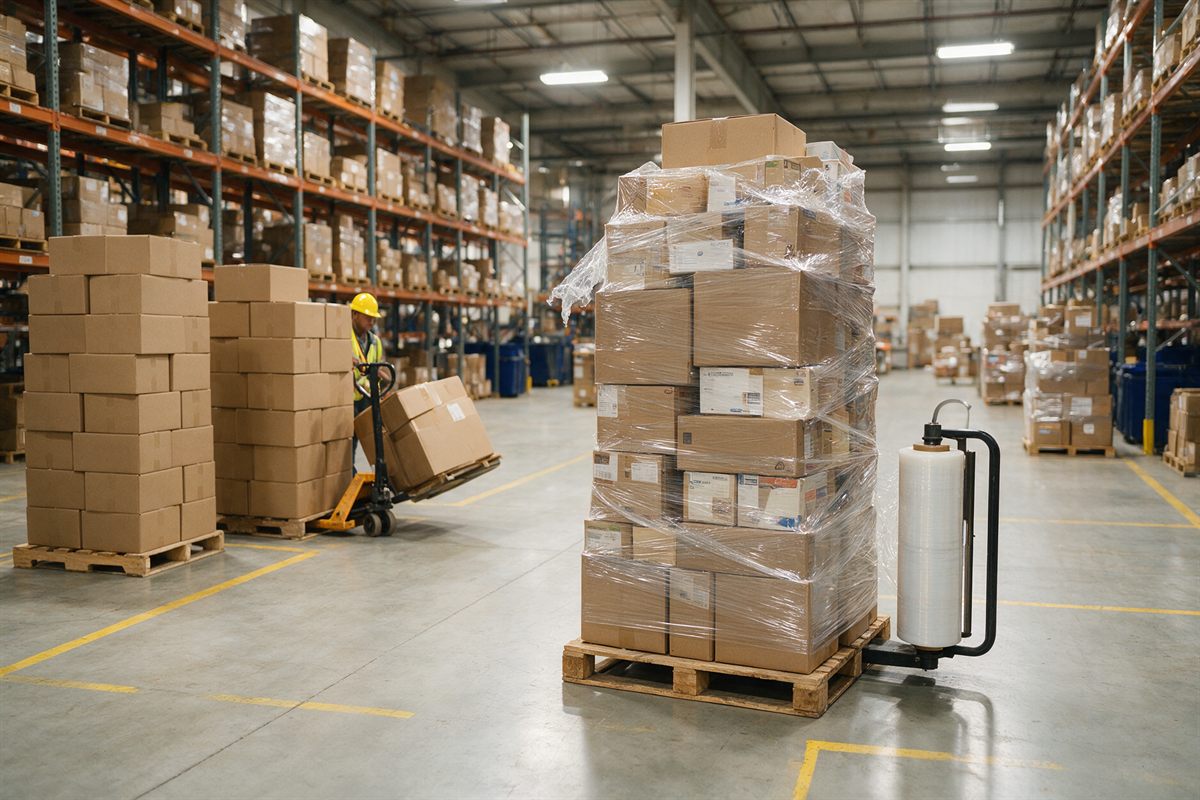
- Sorting: cartons or pallets are separated by destination, customer or order.
- Staging: each outbound group is prepared, labelled and checked.
- Dispatch: goods are loaded and sent to the next stop.
When cross-docking in Dubai makes sense
Cross-docking in Dubai works well when you know where goods are going before they arrive. It is less about speed for its own sake and more about avoiding handling that adds no value.
- Pre-sold stock: shipments that are already allocated to retailer orders or distributor accounts.
- Retail replenishment: regular deliveries that need splitting across several stores or customers.
- Promotional and project stock: goods for a campaign, launch or installation that must reach a site on a planned date.
- Marketplace inbound shipments: cartons that only need checking and labelling before going to a fulfilment centre. Marketplace inbound requirements change, so always confirm the latest rules in Seller Central or the Noon seller portal.
- Fast-moving lines: products that would only sit in racking for a very short time anyway.
It is usually a poor fit when demand is uncertain, when you need to hold safety stock, or when goods arrive without clear destination details. In those cases, regular warehouse storage gives you more control.
Cross-docking vs storage: the key differences
Cross-docking and storage are not competitors. Most businesses use both, depending on the shipment. The table below shows how they differ in practice.
| Factor | Cross-docking | Warehouse storage |
|---|---|---|
| Time in the warehouse | Short — goods move on soon after receiving | Held until orders or replenishment are needed |
| Suited to | Pre-allocated, planned shipments | Stock with uncertain or ongoing demand |
| Handling | Receive, sort, stage, dispatch | Receive, put away, store, pick, dispatch |
| Planning needed | High — destinations known in advance | Moderate — orders can come later |
| Inventory visibility | Tracked per shipment | Tracked by SKU and location over time |
Many distributors run a mixed model: part of each container is cross-docked to customers who have already ordered, and the remainder is put away as stock for future B2B fulfilment. If you are weighing up storage options more broadly, our guide to warehouse storage in Dubai covers the choices in more detail.
Consolidation: the other side of cross-docking
Cross-docking often splits one inbound shipment into many outbound ones. Consolidation does the opposite: it combines goods from several suppliers or shipments into fewer, fuller outbound loads.
For example, a retailer may buy from several local suppliers and want one combined delivery to each store. The warehouse receives each supplier’s goods, holds them briefly, then builds a consolidated delivery once everything has arrived.
Why consolidation helps
- Fewer separate deliveries to the same customer or site.
- Simpler receiving for your customer, with one delivery instead of several.
- Better use of vehicle space.
- One point of checking before goods leave the warehouse.
Enthusiasm 3PL offers both cross-docking and consolidation as part of our value-added logistics services, with delivery using our own trucks.
How to prepare for a smooth cross-dock
Because goods spend so little time in the warehouse, the planning has to happen before the truck or container arrives. Use this checklist with your 3PL.
- Send pre-advice early: packing list, expected arrival and the number of cartons or pallets.
- Share a distribution plan: which cartons go to which customer or site, and in what quantities.
- Label clearly at origin: carton labels with SKU, quantity and, where possible, destination make sorting faster and reduce mistakes.
- Agree delivery windows: confirm receiving times with your customers so goods are not left waiting.
- Decide what happens to leftovers: overages, shortages and damaged cartons need a clear rule — store, return or hold for instruction.
- Agree documentation: delivery notes and proof of delivery requirements for each recipient.
- Check customs questions separately: for imported goods, confirm documentation and any requirements with your customs broker or the relevant authority.
Barcode scanning at receiving helps confirm that what arrived matches what was expected. At our warehouse, stock is scanned at receiving, put-away and picking, which also applies to any part of a shipment that stays in storage. You can read more about this in our inventory management tips for UAE businesses.
Choosing a 3PL for cross-docking in Dubai
Cross-docking depends on coordination as much as space. When you speak to providers, ask practical questions:
- How do you receive and check inbound shipments against the packing list?
- How are discrepancies reported, and how quickly?
- Can you store part of a shipment and dispatch the rest?
- Do you handle delivery yourselves or arrange it through others?
- What information do you need from us before the shipment arrives?
For a wider list of questions, see how to choose the right warehouse and fulfilment partner in Dubai.
Frequently asked questions
Is cross-docking faster than storing goods?
For pre-allocated stock, it usually removes the put-away and picking steps, so goods can move on sooner. The actual timing depends on arrival schedules, sorting work and delivery windows, which you should agree with your provider.
Can I cross-dock part of a shipment and store the rest?
Yes, this is a common approach. The allocated portion is sorted and dispatched, while the remainder is put away as stock for future orders.
What information does a 3PL need for cross-docking?
Typically a packing list, expected arrival details, a distribution plan showing quantities per destination, and any labelling or documentation requirements for each recipient.
Does cross-docking include customs clearance?
Cross-docking is a warehouse handling process. For customs documentation and clearance questions on imported goods, speak to your customs broker or the relevant authority.
Final thoughts
Cross-docking in Dubai is a practical option when goods already have a destination. It cuts unnecessary handling, supports retailer and project deliveries, and works well alongside storage and consolidation. The key is planning: clear pre-advice, a distribution plan and agreed rules for exceptions make the difference between a smooth flow and a congested dock.
Have a shipment that needs to move on quickly? Share your arrival details and distribution plan and we will suggest the right mix of cross-docking, storage and delivery. Request a quote.