

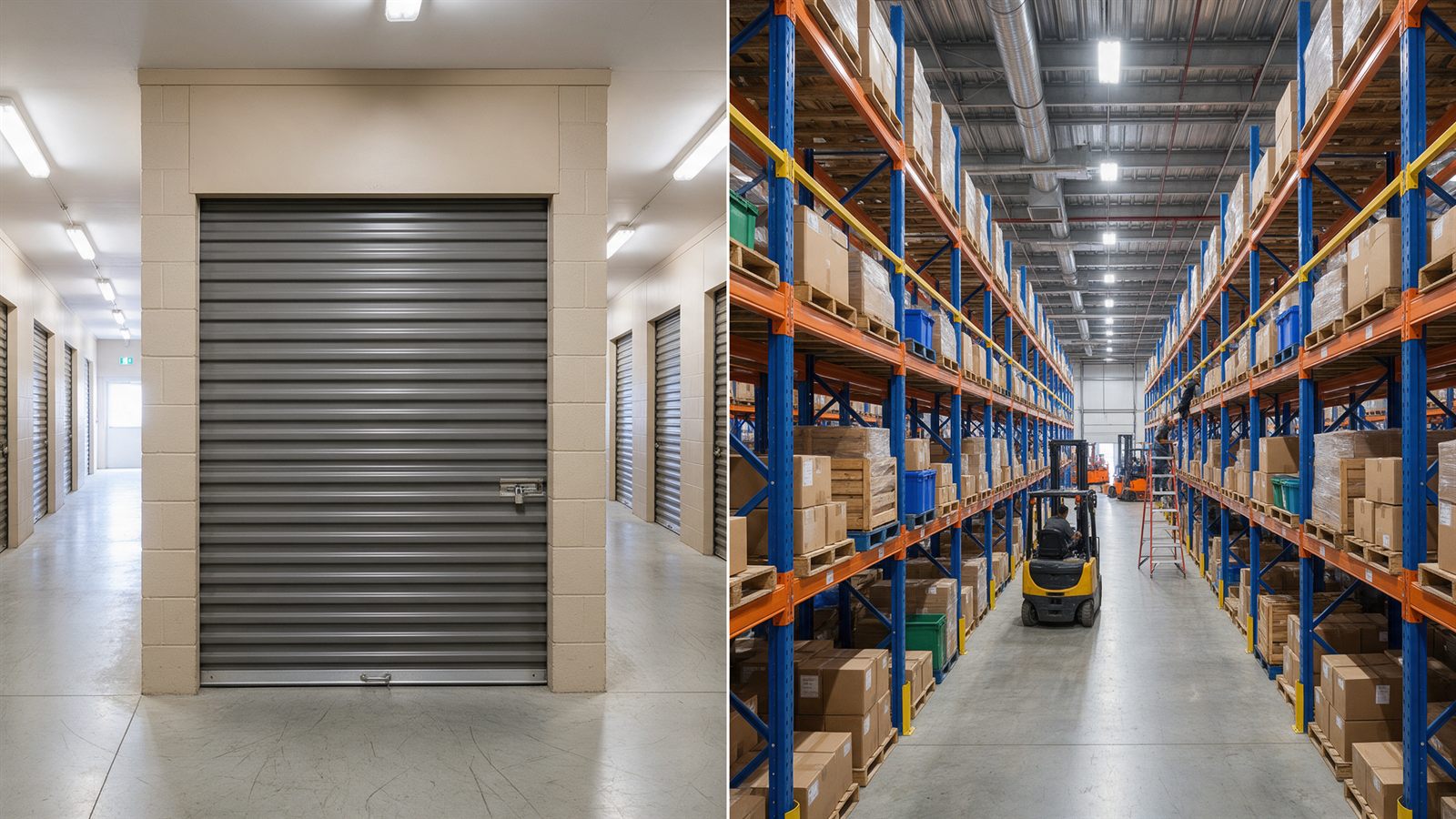
When stock starts to outgrow the office or the spare room, most UAE business owners look at two options: renting a self-storage unit or moving goods into a managed warehouse. Comparing business storage vs self-storage in Dubai is not only about the cost of space. It is about who receives your deliveries, who knows what is on the shelf and who gets orders out of the door.
This guide explains how the two models work, where each one fits and the questions to ask before you sign anything. It is written for e-commerce sellers, importers, distributors and retailers deciding where their inventory should live next.
What self-storage actually offers
A self-storage unit is a lockable space you rent and manage yourself. You bring the goods, you arrange them, you hold the key or access code and you come back whenever you need something. The facility looks after the building, but the contents and everything that happens to them are your responsibility.
For personal belongings, archived documents, spare furniture or a small amount of slow-moving stock, that model can work well. It is simple, and you only deal with the space itself.
The limits appear once the unit holds goods that need to be sold. Nobody is there to accept a supplier delivery, count cartons, pick an order or hand a parcel to a courier. Every movement depends on someone from your team driving over, finding the item and doing the work by hand.
What a managed business storage warehouse does
A third-party logistics (3PL) warehouse is built around moving stock, not just holding it. The provider receives your goods, checks them against your documents, puts them away in known locations and keeps records of what is stored. When you need something to go out, their team picks it, packs it and dispatches it.
At Enthusiasm 3PL in Al Quoz Industrial Area 2, for example, warehouse storage is racked and palletised, and inventory is tracked with barcode scanning at receiving, put-away and picking. The same stock can then feed retailer orders, online orders and marketplace shipments.
Receiving and put-away
Inbound deliveries are unloaded, counted and checked before they are stored. Discrepancies are flagged early, while it is still easy to raise them with the supplier.
Inventory records
Because each movement is scanned, you can ask for a stock position instead of sending someone to look. How stock reports are shared, and how often, is agreed during onboarding. Our guide to inventory management for UAE businesses covers good habits on your side too.
Dispatch and delivery
Orders go out as full cartons for retailers or as individual parcels for online customers through pick and pack. Enthusiasm also delivers with its own trucks, so stock can move from the shelf to your customer without you arranging a separate collection.
Business storage vs self-storage in Dubai: side by side
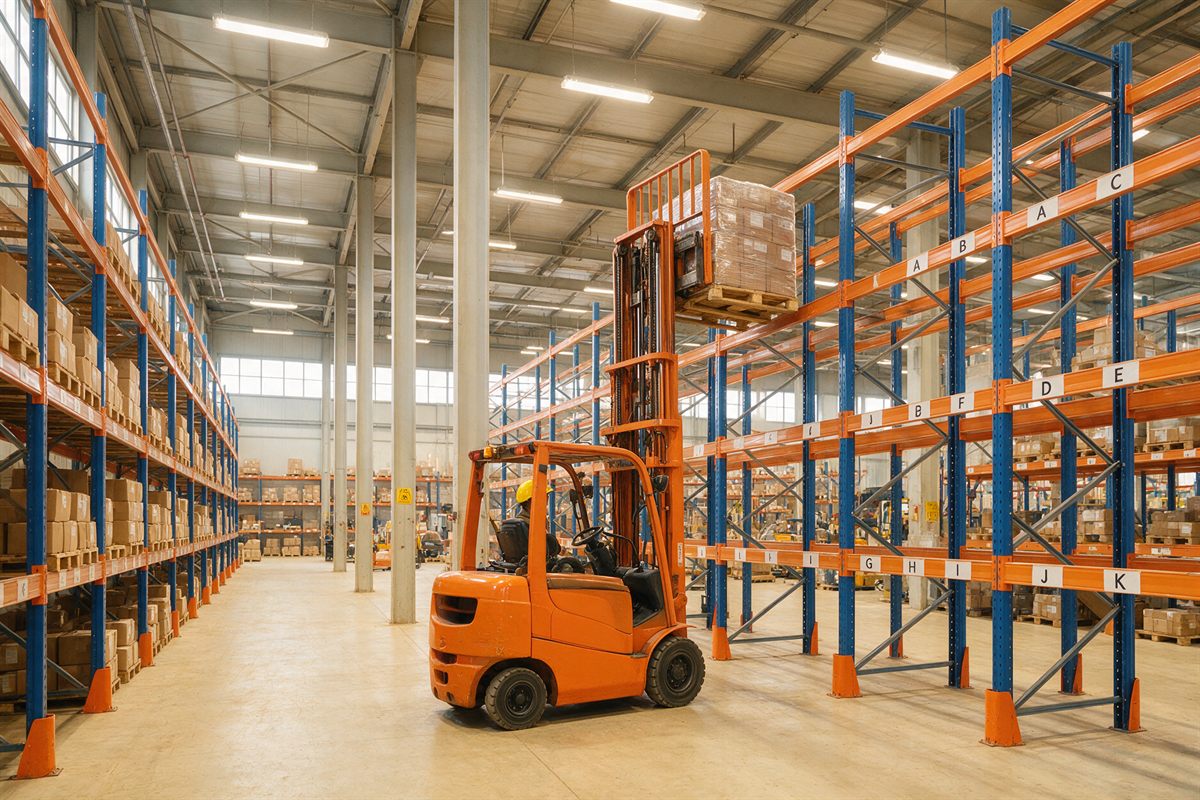
The table below compares the two models on the points that matter most to a trading business.
| Factor | Self-storage unit | Managed 3PL warehouse |
|---|---|---|
| Who handles the goods | You and your team | The warehouse team |
| Receiving deliveries | Someone must be there to meet the vehicle | Received, counted and checked on arrival |
| Stock records | Kept by you, often manually | Updated as stock is received, stored and picked |
| Picking and packing | Done by you on site | Handled by the provider |
| Dispatch | You arrange collection or transport | Organised by the provider, often with delivery options |
| Storage format | An open unit where you stack goods yourself | Racked and palletised locations |
| Value-added work | Not usually available | Labelling, repacking, bundling and returns handling |
| Suited to | Personal items, archives and occasional stock | Stock that is regularly received, sold and shipped |
Who needs which option?
Self-storage usually suits
- Individuals storing household items during a move
- Businesses archiving documents, old displays or event materials
- Very small sellers with a handful of products who pack occasional orders themselves
- Seasonal equipment that is only used a few times a year
A managed 3PL warehouse usually suits
- E-commerce sellers shipping orders most days
- Importers receiving containers or palletised shipments
- Distributors supplying retailers with full or mixed cartons
- Brands selling on their own website and on marketplaces such as Amazon.ae and Noon
- Businesses with products that benefit from temperature-controlled storage, such as perfumes and cosmetics
If you are somewhere in between, a useful test is simple: count how often someone from your team visits the unit each week. If those trips are frequent, you are already running a warehouse, just without the staff, systems or equipment that make it efficient.
The hidden costs of managing storage yourself
Self-storage can look cheaper on paper because you are paying for space alone. A fair comparison should include the time and risk that come with it.
- Staff time: trips to the unit, searching for items and packing orders by hand
- Transport: vehicles, fuel and courier collections arranged one by one
- Stock errors: missing items, shipping the wrong variant or overselling online
- Damage: goods stacked without racking or pallets can be crushed and are harder to inspect
- Missed deliveries: suppliers arriving when nobody is available to receive them
- Lost focus: owners spending hours on logistics instead of sales and sourcing
A 3PL charges for handling as well as space, so its invoice has more lines. For a structured look at how outsourcing can offset that, read how 3PL services can reduce logistics costs in Dubai.
Security and safety
Self-storage facilities secure the building, but what happens inside your unit is up to you. In a managed warehouse, security and safety are part of daily operations. Our Al Quoz site, for example, has 24/7 CCTV monitoring, controlled areas, PPE for staff, fire extinguishers and safety signage. Our warehouse security checklist lists what to check at any provider.
Questions to ask before you decide
Before comparing quotes for business storage vs self-storage in Dubai, answer these questions honestly:
- How many SKUs do you carry, and how many orders do you ship in a typical week?
- Who will receive inbound deliveries, and how quickly must they be counted?
- Do you sell to retailers, online customers or both?
- Do any products need temperature-controlled rooms or extra care?
- How will you know your stock levels each week?
- What happens to customer returns?
- Will you need labelling, repacking or bundling as you grow?
If most answers point towards regular movement of stock, a managed warehouse will usually serve you better. Our warehouse storage in Dubai guide goes deeper into shared space, leases and storage formats.
Frequently asked questions
Is self-storage cheaper than a 3PL warehouse?
Self-storage often has a lower headline cost because it covers space only. A 3PL quote also covers receiving, records, picking, packing and dispatch, so compare the total cost of getting orders out, including your own staff time and transport.
Can I keep business stock in a self-storage unit in Dubai?
Many businesses do, especially at the start. Check the facility’s terms on commercial use, deliveries and the types of goods allowed, and confirm whether your insurance covers stock held there.
Can I move from self-storage to a 3PL later?
Yes. Prepare a product list with SKUs and barcodes, count your stock before the move and agree the transfer date with the provider. Our checklist for switching to a 3PL in Dubai walks through each step.
Do I need to visit the warehouse to send orders?
No. With a managed warehouse, you share orders and the team picks, packs and dispatches them. The way orders are shared and stock reports are provided is agreed during onboarding.
Final thoughts
The choice between business storage vs self-storage in Dubai comes down to one question: does your stock simply sit, or does it move? Self-storage is a sensible home for items you rarely touch. Once goods are being received, sold and shipped regularly, a managed warehouse with a trained team, barcode-based records and dispatch support gives you more control and frees your time to grow the business.
Outgrowing your storage unit? Tell us about your products, SKU count and typical monthly orders and we’ll prepare a proposal for managed storage and fulfilment. Request a quote.